How Nordic bilberries grow under long summer light — and why they continue to attract scientific attention.
Topics: bilberries · anthocyanins · forest nutrition · wild berries
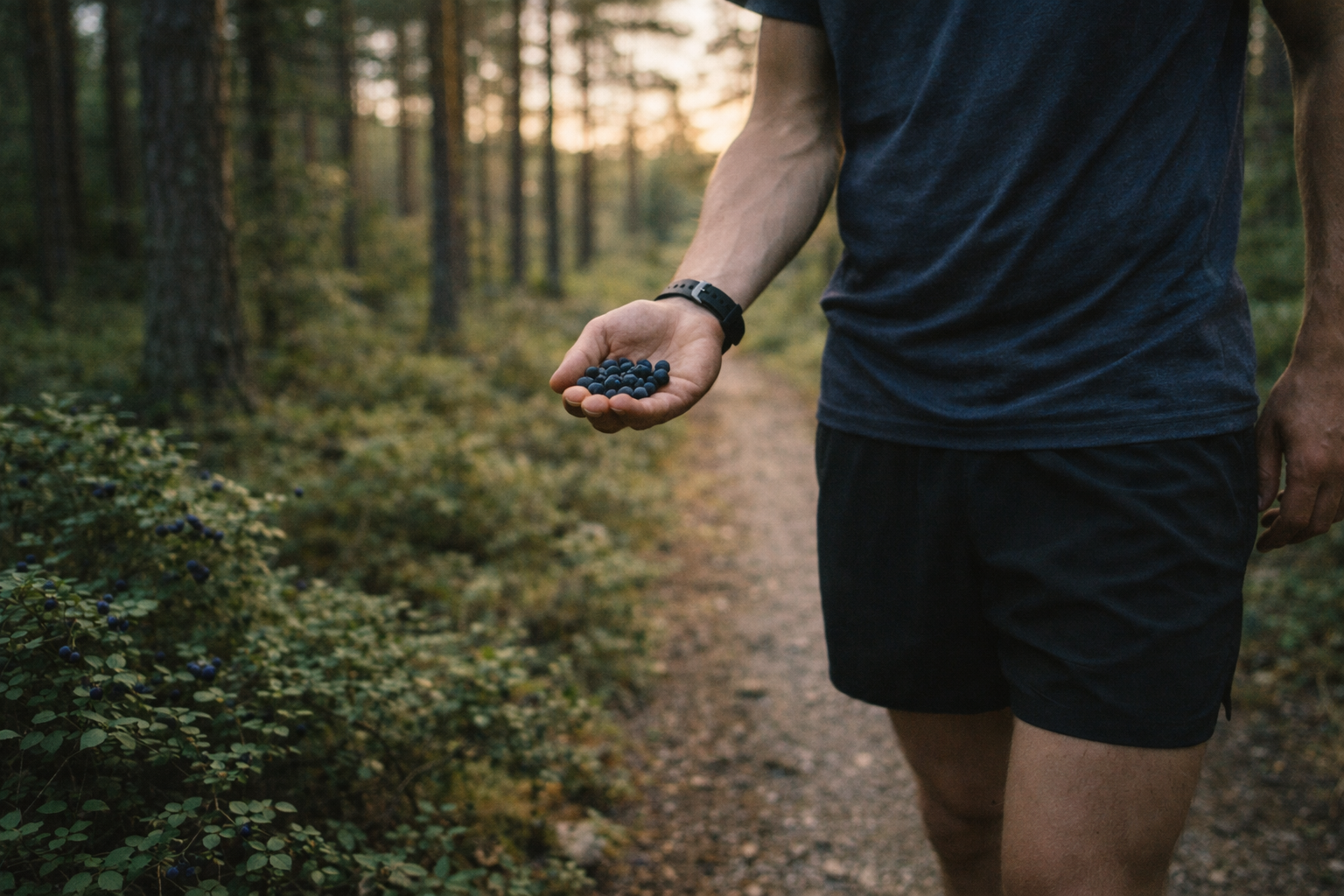
When the forest stays awake
There is a moment in northern summer when evening refuses to arrive. Light lingers between the trees long after dinner, and the forest floor begins to change colour. Moss glows faintly and small dark berries appear among the leaves.
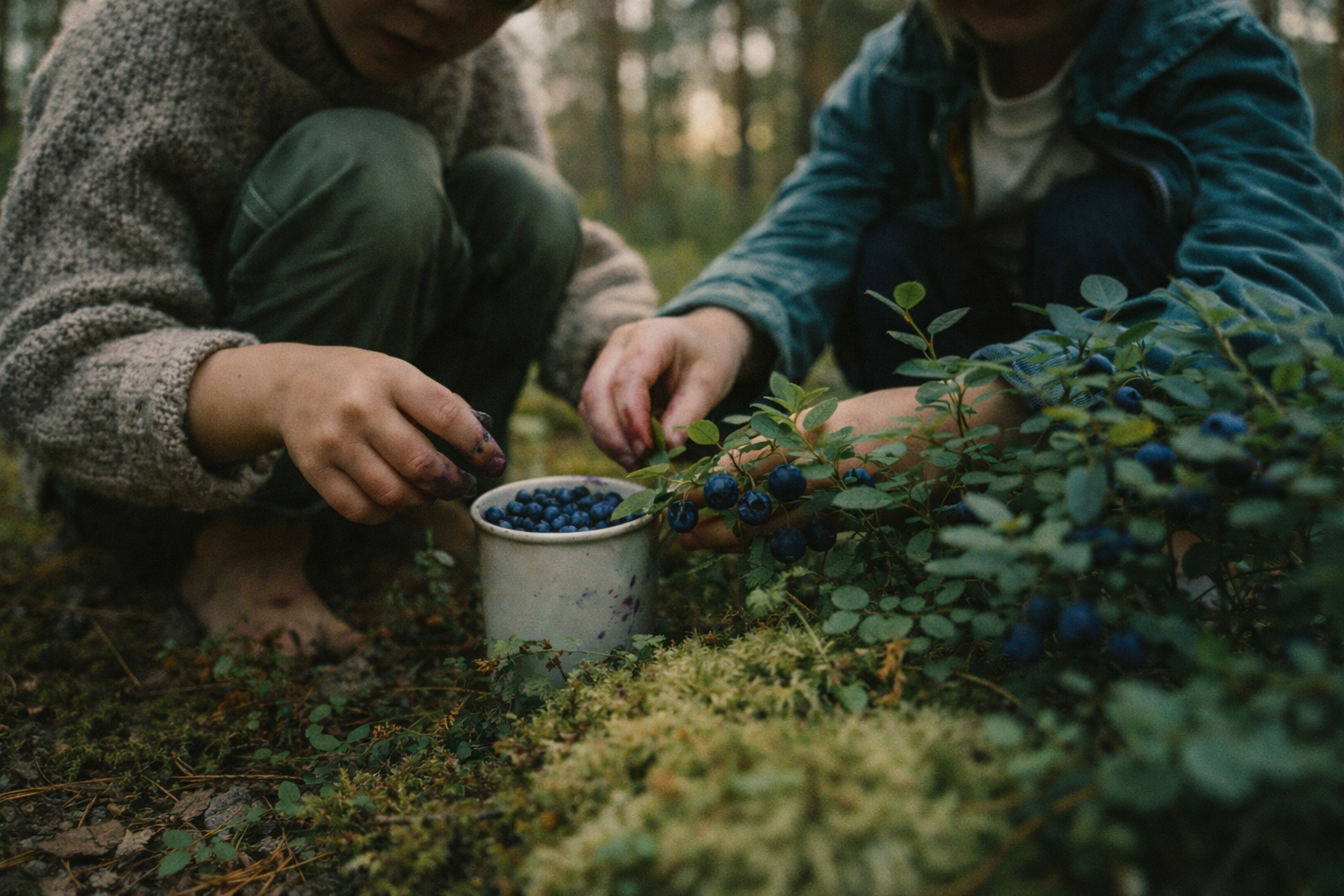
Children usually notice them first. Hands turn purple, pockets slowly fill, and adults begin pointing out which plants are worth picking.
Forest walks often turn into berry hunts without much planning. Many kindergartens spend long days outdoors, and during late summer those walks naturally include tasting what grows along the trail. The forest becomes both classroom and pantry.
For many families, these small routines repeat every year.
“You know the berries are ready when your fingers stay blue even after washing.”
— a saying often heard among Nordic foragers
Not the blueberry most people expect
Wild bilberries are often confused with blueberries, but they are a different species.
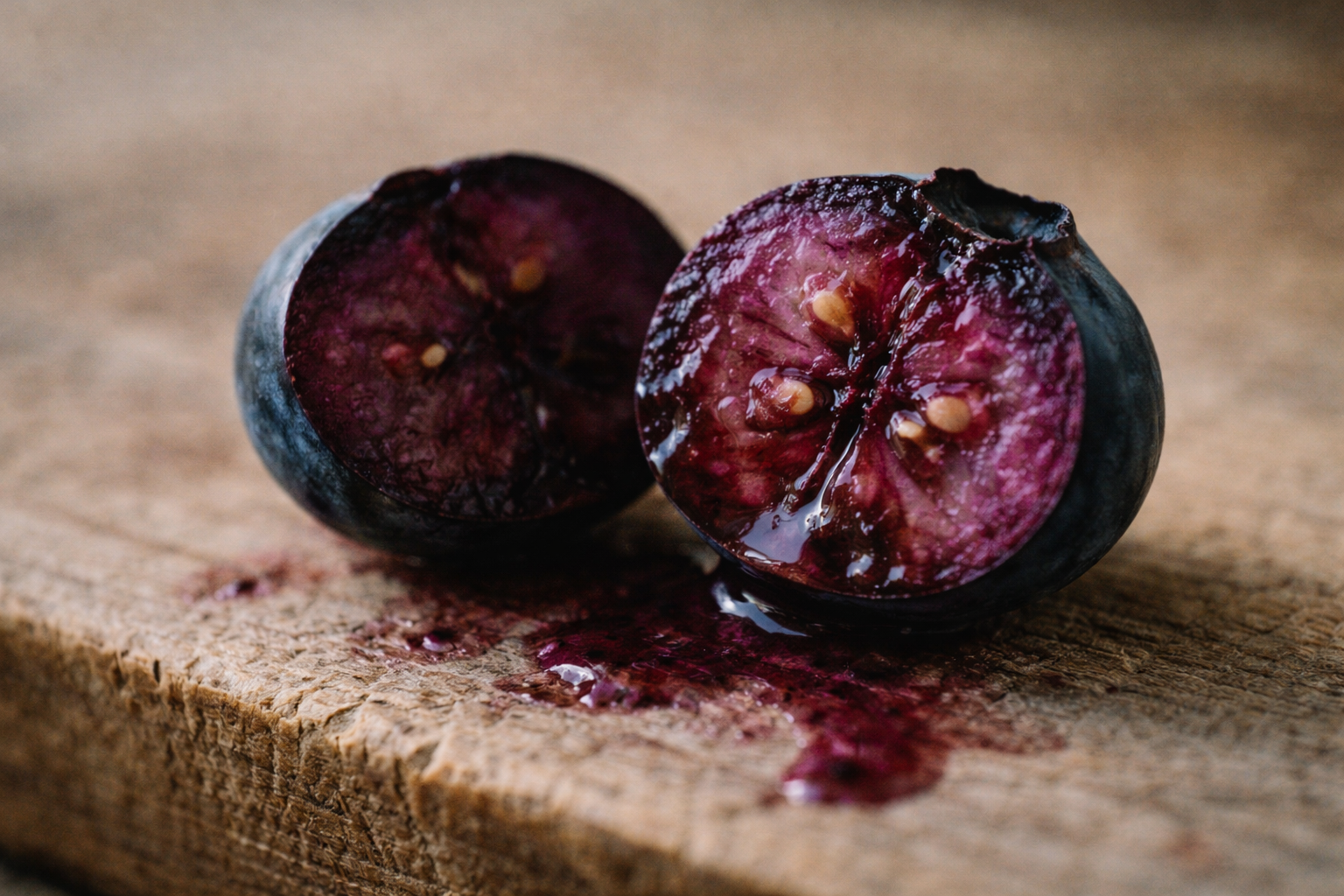
Cultivated blueberries tend to have pale flesh inside. Bilberries carry their deep colour throughout the entire fruit. Cut one open and the inside is the same dark blue that stains your hands.
This colour comes from anthocyanins — plant pigments found in many berries and flowers. They belong to a larger family of compounds known as polyphenols.
Because bilberries grow slowly in colder climates with long daylight hours, researchers have taken interest in their natural composition.
What researchers look at
Scientists studying berries often focus on anthocyanins and other polyphenols because of their biological activity.
Research involving bilberries has explored their relationship with visual function, microcirculation, and oxidative balance. Some studies examine how anthocyanins interact with the eye during prolonged screen use or changing light conditions. Others investigate their role in endurance settings where circulation and oxidative stress are being studied.
As with many plant compounds, the effects are rarely immediate. Most research focuses on consistent intake over time, either through diet or concentrated extracts.
Because of this, bilberries often appear in discussions around routines that support visual comfort, outdoor activity, and ageing populations interested in maintaining balanced nutrition.
A habit shaped by the forest
The most interesting part of bilberry culture is not the science but the habit.
Berries are picked during walks, added to breakfast bowls, or frozen for winter when fresh fruit disappears. A handful in July becomes a jar in January. The practice repeats quietly year after year.
But modern life rarely follows the forest’s calendar. People spend more time indoors, travel further from berry patches, and rely less on seasonal harvests.
That is where extracts enter the story.
And for many people today, when fresh berries are no longer available, extracts offer another way to keep that rhythm intact.
Instead of replacing the forest, they carry a small part of it forward.
Carrying the season forward
Nordic Apothecary Nordic Bilberry Extract concentrates the anthocyanins naturally present in wild bilberries into a measured daily serving.
Some people include it alongside active outdoor routines. Others take it during long workdays in front of screens, or as part of broader nutrition habits that change slowly over time.
Like the berries themselves, the real value appears through consistency rather than intensity.